
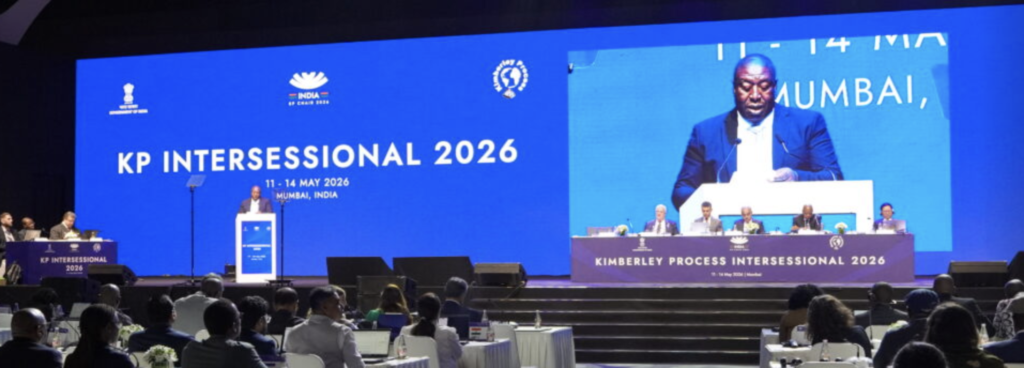
Mined diamond producers and aligned governments have increasingly tried to weaponize the KP's "conflict-free" stamp as a defensive marketing shield against lab-grown diamonds.
The Kimberley Process (KP)—the global regulatory framework designed to prevent “blood diamonds” from entering the mainstream supply chain—is facing an existential crisis. During the recent KP Intersessional meeting in Mumbai, the Kimberley Process Civil Society Coalition (KP CSC) issued a scathing closing statement, accusing member governments and natural diamond trade bodies of attempting to reposition the KP as a marketing and branding tool for natural diamonds, rather than a genuine conflict prevention mechanism. Farai Maguwu, Vice Coordinator of the KP CSC, stated bluntly that the KP “cannot market credibility it has not earned,” pointing out a gaping divide between the industry’s desire to push a “natural diamond romance narrative” and the stark, unreformed realities of diamond mining on the ground.
The Core Conflict: Marketing vs. Mandate
The natural diamond industry is facing acute economic pressures, driven by declining rough and polished prices, job losses in large-scale mines, and shrinking margins. In response, natural diamond producers and aligned governments have increasingly tried to weaponize the KP’s “conflict-free” stamp as a defensive marketing shield against competing luxury sectors—most notably, lab-grown diamonds.
However, Civil Society highlights several critical systemic failures that strip this stamp of its actual meaning:
Failure to Redefine “Conflict”: In its 2025 sessions, the KP once again failed to reform its outdated definition of “conflict diamonds” (which only covers diamonds used by rebel movements to overthrow legitimate governments). This narrow definition completely ignores human rights abuses, modern environmental degradation, and violence perpetrated by state actors or private security firms.
The 2028 Deadlock: The KP operates on a consensus-based model, and because of deep political divides, the coalition notes that the KP cannot even begin addressing these critical definition gaps until the next reform cycle in 2028.
Opacity and Lack of Data: The KP continues to resist opening its statistics database to public scrutiny, concealing data that could help trace illicit financial flows, trade-based money laundering, and smuggling.
Ultimately, Civil Society’s message to the natural diamond sector is clear: Confidence requires honesty. By claiming the trade is “100% conflict-free” while actively blocking reforms that address modern violence, the natural diamond sector’s primary regulatory body is suffering from a massive credibility deficit.
What This Means for the B2B Lab-Grown Diamond Sector
For the lab-grown diamond market, this friction exposes a structural vulnerability in the natural diamond industry’s defense strategy and opens up key B2B narrative opportunities:
1. The Flaw in “Natural” Certifications Exposed
As natural diamond bodies attempt to use the KP stamp to justify luxury price premiums, the open rebellion of the KP’s own Civil Society partners undermines that very stamp. B2B buyers—retailers, designers, and major jewelry houses—are increasingly wary of greenwashing and false marketing claims. The fact that the KP is being openly called out for acting as a “marketing tool” rather than a human rights watchdog gives retailers a strong reason to question the validity of natural “ethical” claims.
2. The Lab-Grown Traceability Advantage
The KP CSC statement highlighted that “greater transparency on diamond origin and chain of custody is essential.” In the natural sector, tracing an artisanal diamond back to a specific plot of land remains an logistical and political nightmare, frequently prone to data manipulation. In contrast, the LGD supply chain is inherently short, clean, and highly auditable. Lab-grown producers can offer point-of-origin provenance (from the specific foundry and reactor to the cutting house) without navigating the geopolitical gridlock of the KP.
3. Redefining “Value” Beyond Scarcity
The natural diamond industry’s push to use the KP as a brand validator stems from a desperate attempt to defend its plummeting margins against LGD market share. However, as consumers look for genuine ESG (Environmental, Social, and Governance) accountability, the LGD sector can capture market share not just on price, but on narrative integrity. While the natural sector waits until 2028 for potential KP reform, LGDs can deliver the transparency that modern consumers demand today.
The Bottom Line
The natural diamond industry’s reliance on the Kimberley Process as a marketing shield is fracturing from the inside out. As the KP prioritizes “natural diamond branding” over actual field-level reform, it creates a trust vacuum. For the B2B lab-grown diamond sector, this is a prime opportunity to emphasize guaranteed origin, rigorous supply-chain transparency, and modern ethical standards that don’t rely on a broken, 20-year-old regulatory framework.

