
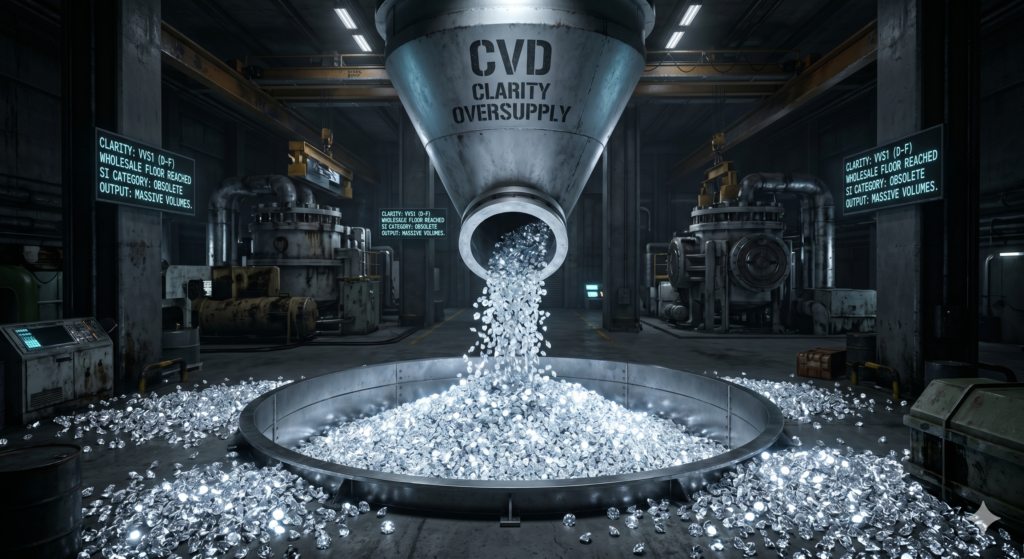
The traditional logic of diamond pricing, based on scarcity as defined by the "4Cs," is collapsing in the lab-grown market.
The traditional logic of diamond pricing, based on scarcity as defined by the “4Cs,” is collapsing in the lab-grown market. Technological optimization in Chemical Vapor Deposition (CVD) has made the production of near-perfect stones (VVS1+, D-F color) inexpensive and abundant. Conversely, producing “imperfect” stones (SI clarities) is now inefficient. This abundance of perfection is driving VVS prices down toward commodity levels, breaking the old pricing tiers, and forcing a market-wide pivot.
Key Data Points and B2B Implications:
The Removal of SI Price Tracking: Major B2B pricing sheets and tracking indices (e.g., IDEX, Rapaport’s nascent LGD lists) have begun removing “SI” (Slightly Included) categories entirely for LGDs. They are no longer statistically significant in volume.
The New Pricing Floor: Growers report that producing high-purity (VS1+) stones now costs roughly the same as producing lower clarities (SI1). The technological recipe for a clean stone is established. The manufacturing “cost per carat” in hubs like Surat and Dubai has fallen so low that VVS stones are now the new standard, priced slightly above production cost.
The Break-Point Carat: This collapse of the VVS premium is most visible in the critical 1.0 to 1.5-carat range—the volume “sweet spot” for engagement rings. When a consumer can purchase a VVS2 for 5% more than a VS1, the lower tier becomes obsolete.
Strategic Directive for B2B Participants:
For Retailers: Stop trying to hold value on “clarity.” It is no longer a selling point; it is the default expectation.
For Wholesalers: The game has shifted from sourcing quality to securing custom geometry. Demand is moving from standard rounds toward proprietary cuts and fancy shapes (ovals, radiants, emerald cuts) where precision cutting still commands a margin, even if the material is flawlessly common.

