
They used to say NEVER
The global lab-grown diamond (LGD) supply chain has spent years waiting for India’s domestic retail market to mature. While Indian facilities process the vast majority of the world’s rough synthesized stones, local consumers have historically viewed jewelry through the lens of gold weight and asset preservation—a cultural mindset that has kept studded jewelry at less than 15% of the total domestic market.
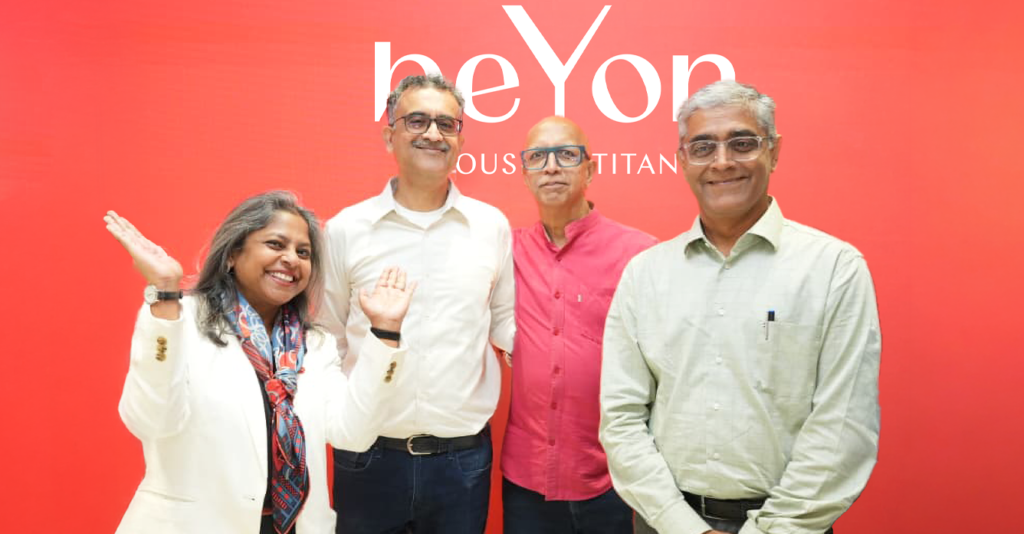
That paradigm is undergoing a major structural shift. Titan Company Limited, the massive consumer goods and luxury division of the multi-billion-dollar Tata Group, has officially entered the sector with its new standalone brand, beYon.
For B2B market participants, this launch is highly instructional. It provides a masterclass in how a major legacy natural-diamond retailer can capture the surging, design-led younger consumer demographic without cannibalizing its core heritage luxury business.
Brand Isolation: The Multi-Tier Corporate Moat
The most critical operational detail for the trade is not the jewelry itself, but how Titan has isolated the brand within its corporate structure.
Titan holds dominant market positions through its established natural diamond lines: Tanishq (mainstream bridal/luxury), Mia (contemporary everyday), and Zoya (boutique high-luxury). Instead of introducing lab-grown lines into these existing retail spaces, Titan is executing a strict segregation strategy:
Physical Quarantining: The new brand will not be sold inside any of Titan’s hundreds of existing jewelry showrooms. It is launching exclusively through dedicated standalone flagship retail stores, starting in major metropolitan areas like Mumbai.
Corporate Lineage: Culturally, Titan has placed the new brand under the “House of Titan” lifestyle umbrella—putting it alongside its watches and accessories lines—rather than the Tanishq jewelry ecosystem.
This infrastructure sends an unambiguous signal to the B2B community: Titan is explicitly defining lab-grown stones as design-driven fashion items, while protecting natural diamonds as rare, investment-grade emotional milestones.
Core Product Mechanics & Policy Disruption
The commercial structure of the rollout reveals exactly where Titan sees the highest margin opportunities in the shifting LGD retail space.
| Operational Component | The ‘beYon’ Execution | B2B Strategic Takeaway |
| Price Point Strategy | Entry-level pricing begins around ₹20,000 ($240 USD), with a strong concentration of inventory hovering near the ₹1,00,000 ($1,200 USD) mark. | Titan is anchoring the brand in a premium “bridge luxury” tier, consciously steering clear of the low-margin wholesale race seen in Western markets. |
| Material Specifications | Strict utilization of 14-karat and 18-karat BIS-hallmarked gold settings across yellow, white, and rose variations. | By maintaining fine jewelry standards for the metal work, the retailer stabilizes overall product margins even as raw stone costs drop. |
| Geometric Differentiation | A 1,250+ piece launch catalog heavily weighted toward exotic fancy cuts (including marquise, pear, emerald, radiant, oval, princess, and cushion shapes). | This capitalizes on the manufacturing flexibility of LGDs, using intricate, design-forward cuts that would be cost-prohibitive in natural diamond categories. |
| Trade-In & Buyback Policy | Strict 0% value retention on the diamond. 100% exchange value applies exclusively to the gold settings. | The Ultimate Market Signal: Titan is actively retraining the consumer to decouple lab-grown purchases from the traditional Indian “financial asset” mentality. |
Macro Implications: The Expansion of the Total Addressable Market
Rather than viewing lab-grown options as a direct threat to natural alternatives, Titan’s commercial strategy treats the two segments as complementary layers of a broader market.
By framing lab-grown items as lifestyle self-purchases for everyday use, the corporate strategy treats the segment as an introductory pipeline. Younger buyers enter the diamond market at an accessible fashion price point today. As they age into major matrimonial and investment life stages, they are expected to graduate into the natural diamond ecosystems of Tanishq or Zoya. It is an “inclusive growth” thesis rather than a zero-sum game.
Expected Market Ripple Effects
Titan’s entry will accelerate the formalization of the organized retail sector across South Asia. Major regional competitors—including Kalyan Jewellers, Malabar Gold, and corporate peers like Reliance Jewels—will likely feel immediate pressure to roll out equivalent standalone sub-brands to defend their youth consumer share.
For growers and wholesale suppliers, this shift transitions the Indian domestic market from an uncertain landscape into a high-volume, credit-worthy demand center. However, because Titan’s inventory focus is intensely design-led and reliant on unique fancy cuts, the suppliers who hold the most leverage will be those who move away from generic round-brilliant mass production and instead specialize in precision-cut, exotic stone geometries.

