
The headline of this week’s New York Times DealBook confirmed what West Los Angeles locals already knew: The mall is back, but not as we knew it.
While traditional “big-box” suburban malls struggle, lifestyle hubs like Westfield Century City are thriving. They aren’t just surviving on foot traffic; they are thriving as high-design, high-margin cathedrals of consumption. As the Times noted, these spaces have become the primary playground for affluent Gen Z and Millennial consumers who crave physical experience over digital scrolling.
For the lab-grown diamond (LGD) sector, Century City provides the ultimate blueprint. The younger audience shopping there—bagging purchases at Louis Vuitton or dine-in at Eataly—is not looking for a “discount diamond.” They are looking for Luxury 2.0.
Here is how B2B LGD brands and retailers can cater to this younger, “Century City” demographic seeking an elevated experience.
1. Architecture of Aspiration: Moving Beyond the “Jewelry Counter”
The Century City shopper bypasses the fluorescent-lit, carpeted jewelry stores of the 1990s. To win them, LGD retail must mimic the boutique aesthetic of high-end skincare or tech brands (think Aesop or Apple).
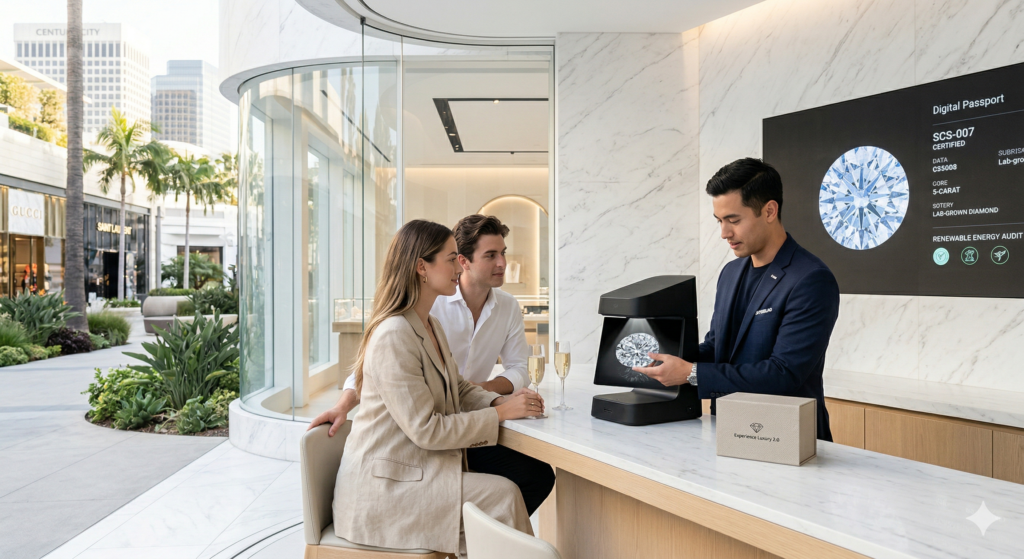
The “Open-Flow” Concept: Remove the intimidating glass barriers. Use “try-on bars” where consumers can touch and feel 4-carat LGDs without needing a salesperson to unlock a case every thirty seconds.
B2B Intel: Wholesalers should offer “Display-Ready Collections” that are curated for minimalist, boutique-style presentation rather than mass-market density.
2. The “Tech-Luxe” Narrative: Science as the New Story
Traditional luxury is built on “heritage” (mines, history). Younger luxury seekers at Century City are built on “Innovation.” * LGD Advantage: LGD brands shouldn’t hide the lab; they should celebrate it. Use high-definition screens to show the plasma growth process. Position the diamond as a technological masterpiece—the “Tesla of Jewelry.”
B2B Intel: Midstream players should provide retailers with “Tech-Kits”—VR headsets or macro-video loops of the CVD process—to turn the sale into an educational event.
3. Sustainability as a “Flex”
For the Gen Z shopper, buying ethical isn’t just a moral choice; it’s a status symbol. They want to know their 5-carat emerald cut didn’t cost the earth.
Transparency over Vague Claims: Brands in these luxury hubs must lead with SCS-007 Sustainability Ratings and Digital Passports. The ability to scan a QR code on a hangtag and see the renewable energy audit of the foundry is the “Luxury 2.0” version of a GIA report.
B2B Intel: Suppliers must prioritize traceable, certified-green inventory. In the Century City environment, “undocumented” LGDs are effectively unsellable.
4. Customization and “The Lab-to-Table” Experience
The younger affluent crowd prizes Exclusivity. They don’t want the same ring everyone else has.
On-Site Design: Offering “Design Consultations” where LGD centers can be paired with bespoke settings in real-time is the jewelry equivalent of the “custom build” features found at the Lucid or Tesla showrooms in the mall.
B2B Intel: This requires a “Virtual Vault” relationship. Retailers need wholesalers who can ship specific, calibrated fancies (Ovals, Elongated Cushions) for overnight viewing to close these high-touch sales.
The Bottom Line for 2026
The resurgence of the high-end mall proves that luxury is a feeling, not just a price point. LGD brands that try to compete on “cheap” will be invisible at Century City. Those that compete on design, technology, and ethics will capture the most powerful spending demographic of the next decade.

